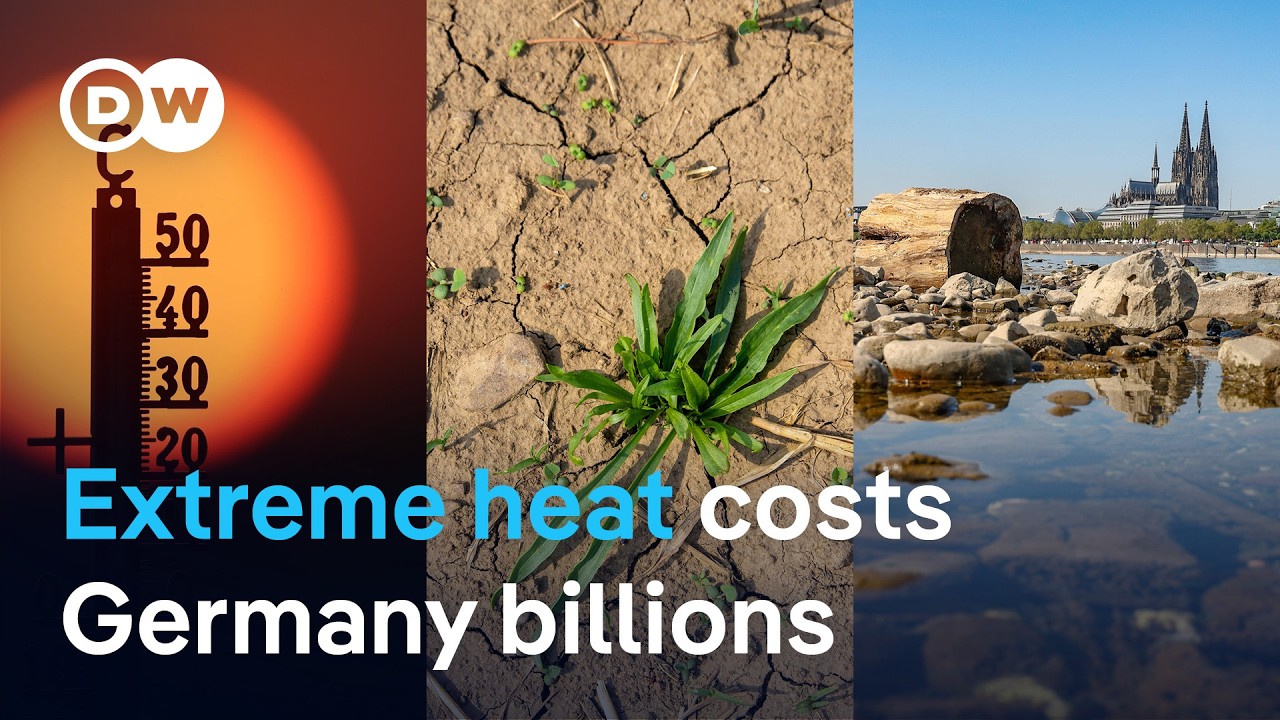
Germany's 25-day heat wave costs economy €36 billion, disrupts farms and factories
According to a Greenpeace analysis reported by DW News, Germany experienced 25 consecutive days of extreme heat that cost the economy an estimated €36 billion in lost productivity across agriculture, manufacturing, and supply chains. The heat wave disrupted farm operations, forced factory slowdowns, and closed schools. Greenpeace economist Mauricio Vargas argues that Germany could reduce future losses through infrastructure investment and heat adaptation strategies, though DW News notes questions about the reliability of the €36 billion figure.
📹 Source Video
This story has 53 US mainstream media articles corroborating the event, confirming the heat wave and economic impact as real and widely reported. Claims reflect both reported facts and economist analysis presented in the source material.
✓ Verified
- ✓Germany experienced extreme heat lasting 25 days. (Source: DW News video title)
- ✓Greenpeace estimates the economic cost at €36 billion. (Source: DW News description, timestamp 00:00)
- ✓The heat wave affected farms, factories, schools, and supply chains. (Source: DW News description)
~ Interpretation
- ~The analysis argues Germany could reduce productivity losses through specific infrastructure and adaptation measures. (Source: DW News/Mauricio Vargas economist analysis, timestamp 03:01)
- ~The Greenpeace estimate of €36 billion reflects the 'hidden costs' of heat waves as a category. (Source: DW News framing, description)
▸▾Why this is here
Learn about our confidence system → · What qualifies a story →
Stay with this story
Response links are not endorsements. They are restrained ways to learn more, track updates, and ask better questions.
Eligibility: Local safety stories can include official reporting and public service resources. View taxonomy →
Did this feel useful, agenda-driven, or unclear?
Get stories like this every morning.
Free daily briefing, 5 minutes, no spin.
Free. No spam. Unsubscribe anytime.