Persian Gulf pipeline race reshapes global oil export routes around Hormuz chokepoint
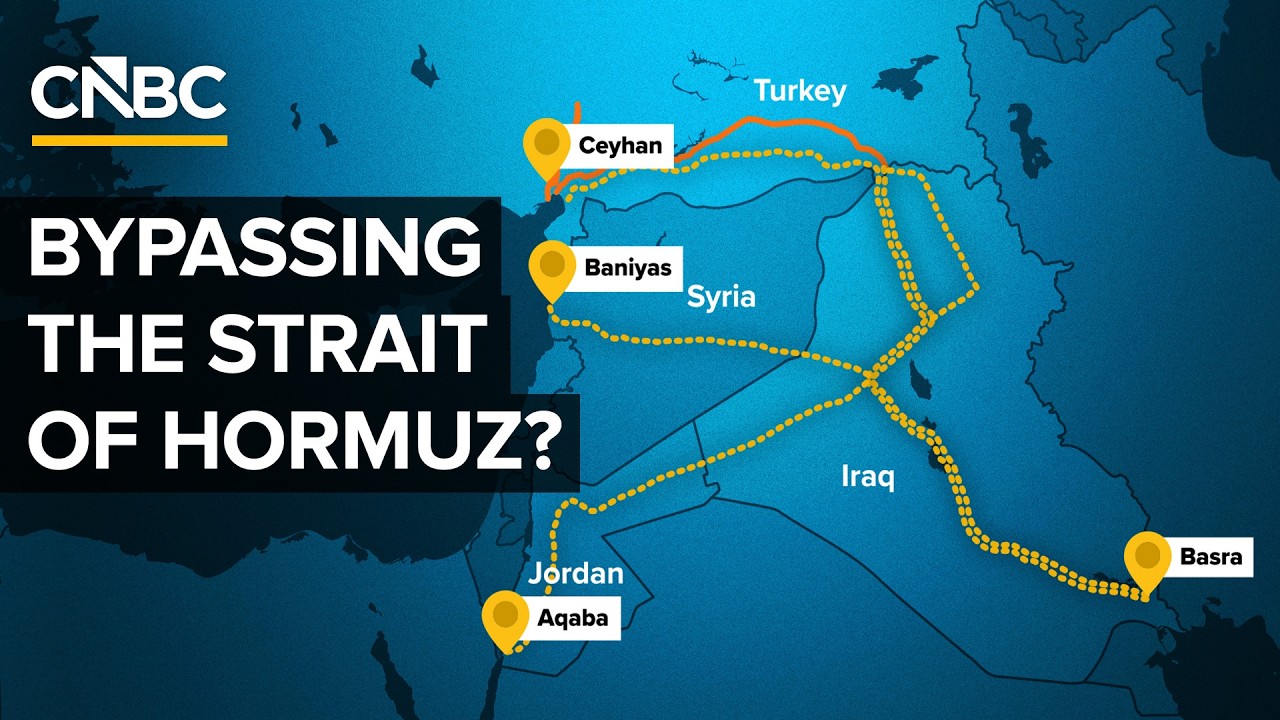
Major energy companies including Chevron are investing in new pipelines, ports, and export terminals across the Persian Gulf to bypass the Strait of Hormuz, a critical chokepoint through which roughly one-third of global seaborne oil passes. According to CNBC, the multi-billion dollar infrastructure push aims to create alternative Mediterranean routes that would reduce regional export vulnerability. CNBC's Pippa Stevens reports that these new routes carry significant limitations — including capacity constraints — that could alter how global oil reaches key markets.
📹 Source Video
✓ Verified
- ✓Major energy companies are building new pipelines and export infrastructure in the Persian Gulf. (Source: CNBC, viral engagement 186,750)
- ✓The Strait of Hormuz is a critical global oil transport chokepoint. (Source: 11 US mainstream media articles covering Persian Gulf energy infrastructure)
- ✓Alternative routes to Mediterranean Sea are being developed. (Source: CNBC report on Chevron and industry initiatives)
~ Interpretation
- ~New infrastructure represents a multi-billion dollar investment to recover export capacity. (CNBC source characterization)
- ~These alternatives could reshape the global flow of oil. (CNBC source argues, based on identified limitations in new routes)
▸▾Why this is here
Learn about our confidence system → · What qualifies a story →
Stay with this story
Response links are not endorsements. They are restrained ways to learn more, track updates, and ask better questions.
Eligibility: Local safety stories can include official reporting and public service resources. View taxonomy →
Did this feel useful, agenda-driven, or unclear?
Get stories like this every morning.
Free daily briefing, 5 minutes, no spin.
Free. No spam. Unsubscribe anytime.