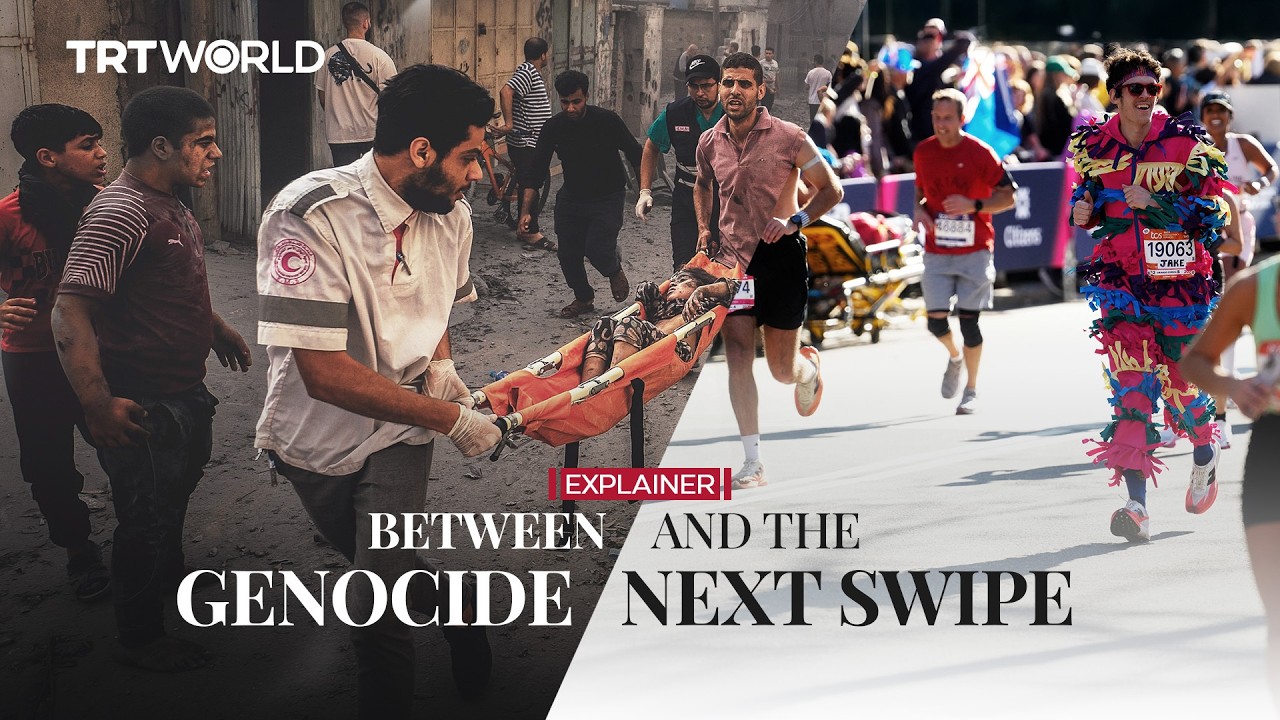
TRT World examines how social media normalizes war coverage amid humanitarian crises
TRT World's analysis argues that social media platforms blur genocide, influencer content, and advertisements into undifferentiated feeds, according to the source. The analysis frames this as a risk to urgent humanitarian stories becoming "background noise" in the attention economy.
📹 Source Video
This item is classified as Analysis. Claims reflect the source's arguments about social media's effect on humanitarian coverage, not independently verified findings. The video examines a media phenomenon rather than reporting a discrete news event.
✓ Verified
- ✓TRT World published video content on social media's role in normalizing war coverage. (Source: YouTube platform metadata, title, and description)
~ Interpretation
- ~Social media platforms merge genocide coverage, influencer culture, and advertisements into uniform feeds. (Source argument: TRT World video description)
- ~Humanitarian stories risk becoming 'background noise' in the attention economy. (Source argument: TRT World video description)
- ~The convergence of these content types normalizes conflict. (Source argument: TRT World video title and framing)
▸▾Why this is here
Learn about our confidence system → · What qualifies a story →
Stay with this story
Response links are not endorsements. They are restrained ways to learn more, track updates, and ask better questions.
Share responsibly
Share the story with context, not outrage. Include what is known and what remains unclear.
Eligibility: Geopolitical conflict is limited to learning, tracking, and careful sharing. View taxonomy →
Did this feel useful, agenda-driven, or unclear?
Get stories like this every morning.
Free daily briefing, 5 minutes, no spin.
Free. No spam. Unsubscribe anytime.