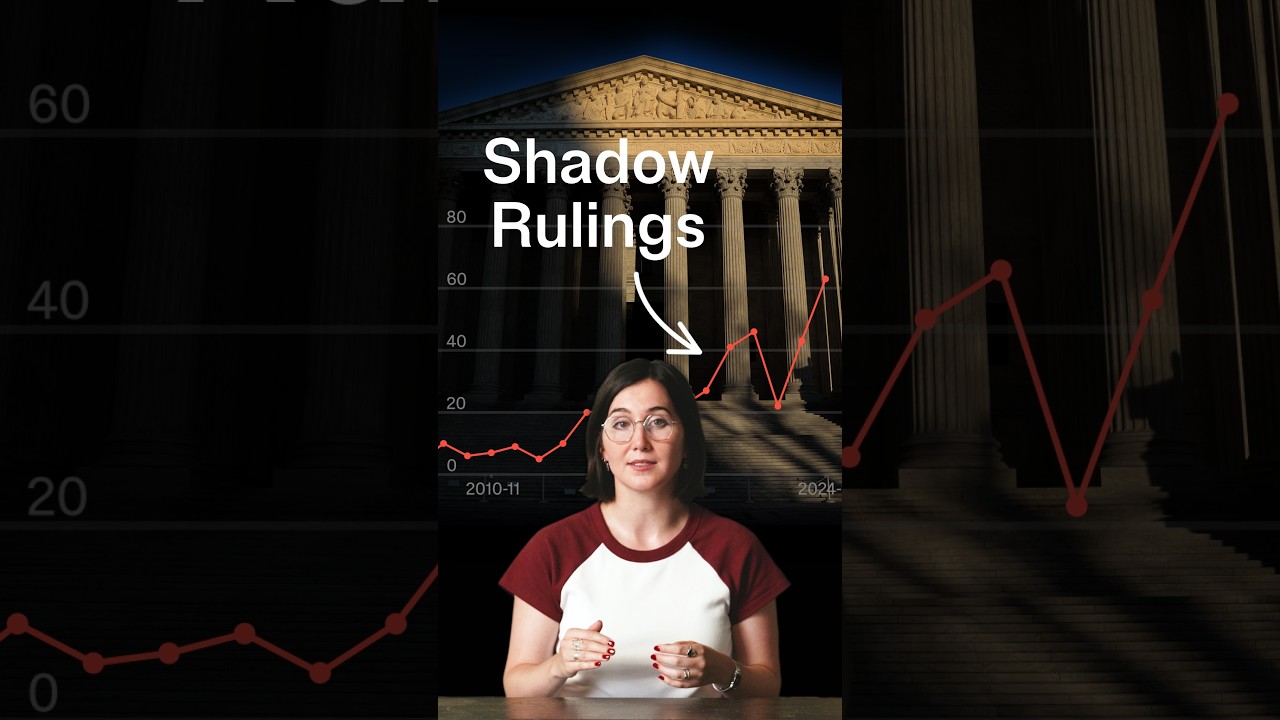
Supreme Court decides more cases through expedited shadow docket than open court proceedings
According to ProPublica's investigation, the Supreme Court decided more cases through fast-tracked, secretive "shadow docket" proceedings than through open court for likely the first time in modern history. The source reports that the Trump administration used these emergency procedures to bypass lower courts on deportations, abortion access, and other major issues.
🧭 In Context
According to ProPublica's investigation, the Supreme Court's use of the shadow docket—an expedited procedure originally designed for rare emergencies—has expanded significantly under the current administration. The source reports that this shift has allowed the executive branch to bypass traditional appellate review on high-stakes policy matters. ProPublica's analysis frames this trend as part of a broader institutional pattern affecting judicial oversight of executive actions.
📹 Source Video
What we know
- ✓The Supreme Court decided more cases through shadow docket proceedings than through traditional open court for likely the first time in modern history. (ProPublica)
- ✓At least 66 mainstream media outlets have reported on this story, indicating broad coverage. (MSM coverage metric)
What remains unclear
- ?The specific number of shadow docket cases decided versus open court cases in the reporting period is not detailed in the description.
- ?The exact legal and procedural changes that enabled the increased use of shadow docket proceedings are not specified.
- ?The scope and outcome of individual deportation and abortion cases decided through the shadow docket is not enumerated.
- ?Whether previous administrations used shadow docket procedures at comparable rates requires historical comparison not provided.
✓ Verified
- ✓ProPublica reported that the Supreme Court decided more cases through shadow docket proceedings than in open court, for likely the first time in modern history. (ProPublica)
- ✓The source documents that the Trump administration used expedited shadow docket procedures on deportation and abortion access cases. (ProPublica)
- ✓At least 66 mainstream media articles have covered this story. (MSM coverage count)
~ Interpretation
- ~The shift from rare emergency process to routine shadow docket use represents a change in how the Court operates. (ProPublica analysis)
- ~The source frames this development as raising concerns about public trust in the Supreme Court's transparency and accountability. (ProPublica framing)
▸▾Why this is here
Learn about our confidence system → · What qualifies a story →
Stay with this story
Response links are not endorsements. They are restrained ways to learn more, track updates, and ask better questions.
Share responsibly
Share the story with context, not outrage. Include what is known and what remains unclear.
Eligibility: Contested political stories are limited to learning, tracking, and careful sharing. View taxonomy →
Did this feel useful, agenda-driven, or unclear?
Get stories like this every morning.
Free daily briefing, 5 minutes, no spin.
Free. No spam. Unsubscribe anytime.