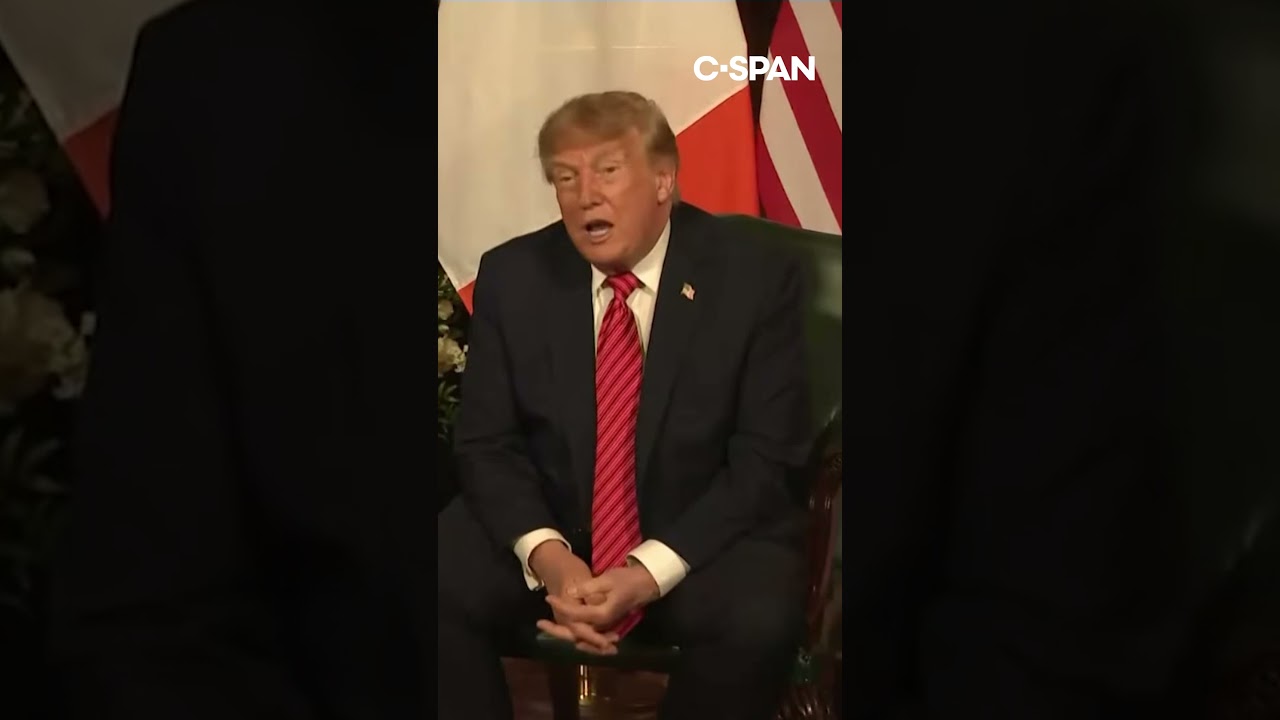
Trump calls for Irish unification, breaks decades of U.S. neutrality on contentious issue
President Trump stated Saturday in Dublin that he would 'love to see' Northern Ireland and the Republic of Ireland unified, departing from longstanding U.S. policy neutrality on the issue. Trump made the remarks alongside Irish Prime Minister Micheál Martin, saying unification 'is going to happen eventually, may as well happen now.' The U.S. helped broker the 1998 Belfast Agreement, also known as the Good Friday Agreement, which largely ended conflict in Northern Ireland and established the framework under which Irish unification requires consent from both jurisdictions.
🧭 In Context
According to the source and 92 mainstream media reports, Trump's statement contradicts decades of U.S. policy restraint on the Irish unification question. Reuters and AP reporting notes that the 1998 Good Friday Agreement established a framework requiring consent from both Northern Ireland and the Republic for unification, and U.S. neutrality on the political outcome has been a cornerstone of American support for the peace process. Trump's public endorsement of unification represents a notable shift in official U.S. positioning on this historically contested issue.
📹 Source Video
What we know
- ✓Trump stated in Dublin he would 'love to see' Irish unification, saying it 'is going to happen eventually, may as well happen now.' (C-SPAN)
- ✓The statement was made alongside Irish Prime Minister Micheál Martin. (C-SPAN)
- ✓Trump's remarks diverge from longstanding U.S. policy neutrality on the unification question, per 92 mainstream media reports covering the departure as significant.
What remains unclear
- ?What diplomatic or policy consequences, if any, may follow from the U.S. shifting its public stance on Irish unification.
- ?How the Irish and Northern Irish governments and political parties will formally respond to Trump's endorsement of unification.
- ?Whether Trump intends this as a binding policy shift or a rhetorical statement.
✓ Verified
- ✓Trump said he would 'love to see' Northern Ireland and the Republic of Ireland unified. (C-SPAN, 92 mainstream media articles)
- ✓Trump made the remarks in Dublin alongside Irish Prime Minister Micheál Martin. (C-SPAN, 92 mainstream media articles)
- ✓The U.S. helped broker the 1998 Belfast Agreement, also known as the Good Friday Agreement. (C-SPAN, 92 mainstream media articles)
- ✓The Good Friday Agreement largely ended conflict in Northern Ireland. (C-SPAN, 92 mainstream media articles)
~ Interpretation
- ~Trump's remarks represent a break with decades of U.S. neutrality on Irish unification. (Source characterization, verified by 92 MSM articles covering the departure as significant)
▸▾Why this is here
Learn about our confidence system → · What qualifies a story →
Stay with this story
Response links are not endorsements. They are restrained ways to learn more, track updates, and ask better questions.
Share responsibly
Share the story with context, not outrage. Include what is known and what remains unclear.
Eligibility: Contested political stories are limited to learning, tracking, and careful sharing. View taxonomy →
Did this feel useful, agenda-driven, or unclear?
Get stories like this every morning.
Free daily briefing, 5 minutes, no spin.
Free. No spam. Unsubscribe anytime.