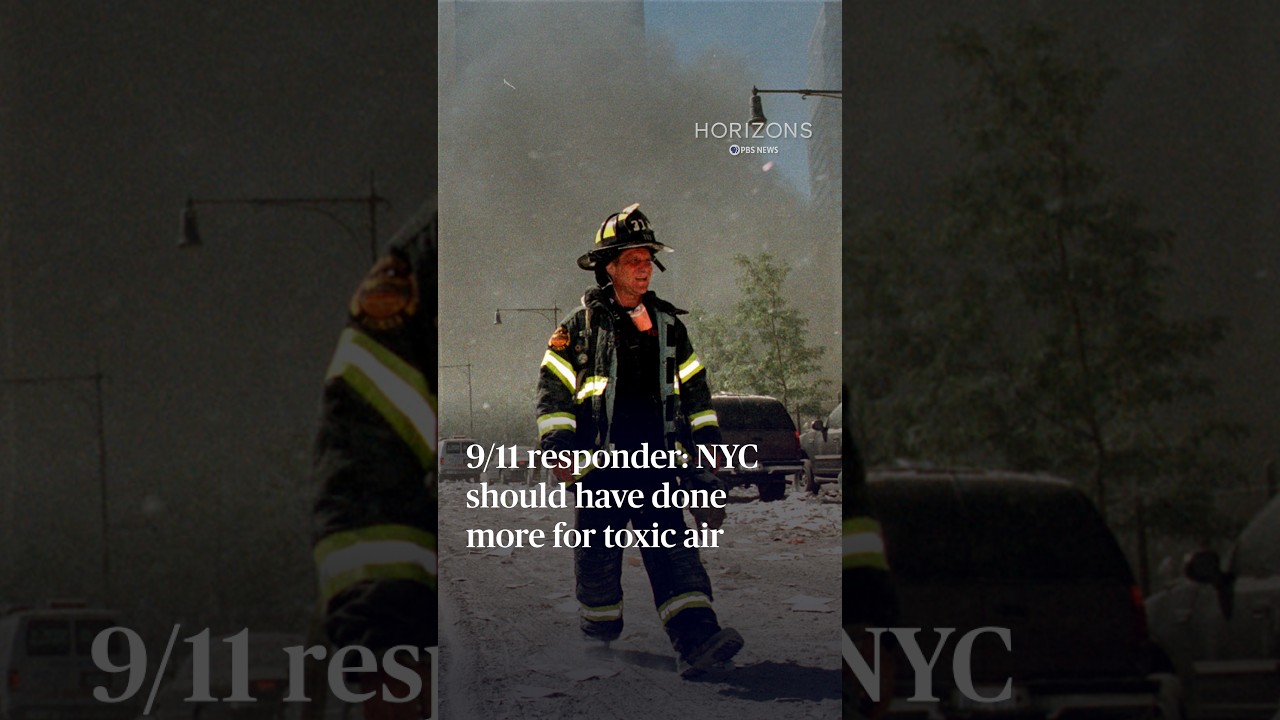
9/11 responder: NYC officials withheld toxic air data, worsened health crisis
9/11 first responder John Feal told PBS NewsHour's Horizons host William Brangham that New York City officials should have publicly disclosed that the air and water in Lower Manhattan were unsafe after the September 11 attacks, rather than rushing to reopen the area. Feal said more lives could have been saved had the city delayed reopening and been transparent about contamination risks. He characterized the city's approach as having "escalated a serious issue into something that now cannot be fixed because we are evolving for the worst."
🧭 In Context
According to PBS NewsHour and public health records, first responders and Lower Manhattan residents have experienced documented health consequences attributed to post-9/11 air and water contamination. Per the 9/11 Health and Compensation Program, tens of thousands of responders have been diagnosed with 9/11-related cancers and respiratory illnesses. Feal's argument addresses the longstanding debate over whether earlier and more transparent communication about environmental hazards could have changed exposure patterns or enabled preventive action.
📹 Source Video
What we know
- ✓Lower Manhattan was reopened to residents and workers following the September 11 attacks in 2001. (Historical record, widely reported)
What remains unclear
- ?Whether NYC officials possessed complete air quality and water safety data at the time of reopening decisions, or what specific data existed in September 2001.
- ?What specific timeline of disclosure would have prevented documented health outcomes, given the scope of exposure across the affected area.
- ?Whether earlier public communication about contamination would have materially reduced exposure among responders who continued working in Lower Manhattan regardless of official guidance.
- ?Which specific health outcomes Feal attributes directly to lack of disclosure versus inevitable exposure from the scale of the event itself.
This item is classified as Analysis. Claims reflect the source's arguments and characterizations of institutional failure, not independently verified findings. The underlying historical facts (9/11, reopening, health impacts on responders) are well-documented; Feal's specific critique of disclosure and timing represents his analytical perspective on institutional decision-making.
✓ Verified
- ✓John Feal is a 9/11 responder. (PBS NewsHour interview, public record)
- ✓The September 11 attacks occurred. (Historical fact, widely documented)
- ✓Lower Manhattan was reopened following the attacks. (Historical fact, widely documented)
~ Interpretation
- ~NYC officials should have disclosed toxic air and water contamination more fully. (Feal's argument, not independently verified across sources)
- ~Delayed reopening combined with public disclosure could have saved lives. (Feal's analysis of counterfactual, not a verified finding)
- ~The city's response escalated the health issue into something irreversible. (Feal's characterization of institutional impact, not independently confirmed causation)
▸▾Why this is here
Learn about our confidence system → · What qualifies a story →
Stay with this story
Response links are not endorsements. They are restrained ways to learn more, track updates, and ask better questions.
Eligibility: Unknown story types default to learning and tracking only. View taxonomy →
Did this feel useful, agenda-driven, or unclear?
Get stories like this every morning.
Free daily briefing, 5 minutes, no spin.
Free. No spam. Unsubscribe anytime.