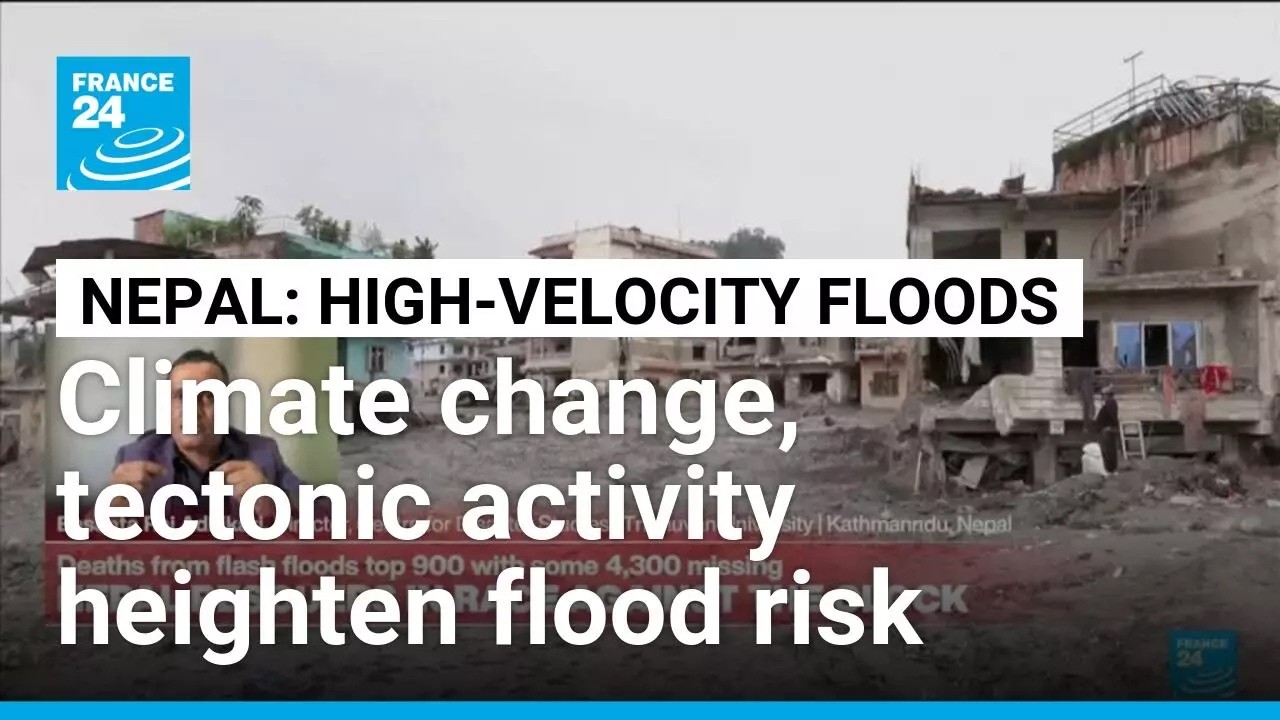
Nepal's unprecedented floods force new disaster engineering approaches in Himalayas
Nepal experienced severe flooding with velocities reaching 170–180 kilometers per hour, triggering hazards including ice and snow avalanches and glacial lake outbursts, according to Dr. Basanta Raj Adhikari, Director of the Center for Disaster Studies at Tribhuvan University's Institute of Engineering. The analysis argues that conventional flood prevention methods have proven insufficient in the Himalayan region. Per the source, the disaster demonstrates the need for new engineering approaches and risk-sensitive urban planning strategies adapted to extreme mountain environments. The event underscores the vulnerability of South Asian infrastructure to climate-driven hydrological hazards.
📹 Source Video
This item is classified as Analysis. Claims reflect the source's arguments and characterizations, not independently verified findings. The underlying flood event is confirmed by 58 US mainstream media articles.
✓ Verified
- ✓Nepal experienced severe flooding in 2026. (Source: France 24 interview with disaster expert; 58 US MSM articles corroborate event occurrence)
- ✓Dr. Basanta Raj Adhikari is Director of the Center for Disaster Studies at Tribhuvan University's Institute of Engineering. (Source: France 24 identification)
~ Interpretation
- ~Flood velocities reached 170–180 kilometers per hour. (Source: Dr. Adhikari's characterization in France 24 segment)
- ~Conventional prevention methods illustrate limits in Himalayan contexts. (Source: Dr. Adhikari's analysis argument in interview)
- ~New engineering approaches and risk-sensitive urban planning are required. (Source: Dr. Adhikari's prescriptive analysis)
▸▾Why this is here
Learn about our confidence system → · What qualifies a story →
Stay with this story
Response links are not endorsements. They are restrained ways to learn more, track updates, and ask better questions.
Eligibility: Disaster stories can show official updates and local resources, but support links require human approval. View taxonomy →
Did this feel useful, agenda-driven, or unclear?
Get stories like this every morning.
Free daily briefing, 5 minutes, no spin.
Free. No spam. Unsubscribe anytime.